Showing posts with label Pizze e focacce. Show all posts

26 July 2011

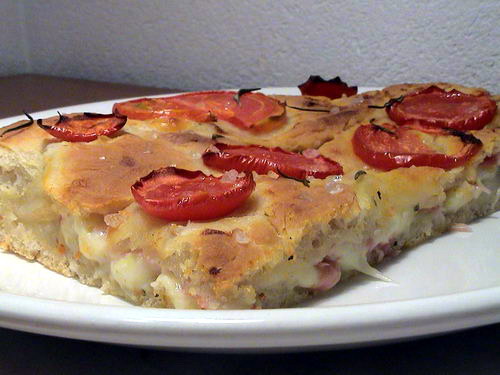
Focaccia con pomodorini, cipolle e salsiccia Napoli piccante


Quest'estate 2011 è davvero anomala per le temperature: difficilmente si superano i 25 gradi di giorno e la notte si scende fino a 16, ecco, allora, lasciamo pure da parte insalate di riso e compagnia bella, e concediamoci qualcosa di caldo e di più calorico. Questa è un'altra ricetta preparata coi salumi Tre Valli, ed in particolare con la salsiccia piccante, ottima su pizze e focacce.


Ingredienti
Per la pasta: 100gr di farina di grano duro – 250gr di farina tipo Manitoba - 150gr di farina 00 - 5gr di lievito di birra - 300ml di acqua - 1 cucchiaio di olio extravergine di oliva - 2 cucchiaini e mezzo di sale - 2 cucchiaini di zucchero
Per la copertura: ca. 10 pomodorini ciliegia – 1 cipolla bianca piccola – salsiccia Napoli piccante - sale grosso q.b. – 2 o 3 cucchiai di olio extravergine di oliva per spennellare.


Con Macchina del Pane o impastatrice: Mettere gli ingredienti nella MdP secondo le istruzioni del costruttore, e selezionare il programma impasto.
A mano: Mescolare i tre tipi di farina con il sale, aggiungere gradatamente l'acqua tiepida e poi il lievito fatto sciogliere in un poco d'acqua e zucchero. Impastare bene in modo da ottenere un impasto morbido ed elastico. Aggiungere l'olio ed impastare ancora. Lasciare lievitare, coperto, per tre ore.

Stendere con le mani l’impasto in una teglia e lasciare lievitare ancora per 45 minuti.
Spennellare la focaccia con olio di oliva, distribuirvi i pomodorini tagliati a metà inserendoli nell’impasto, la cipolla tagliata sottilissima e cospargere con un poco di sale grosso. Cuocere in forno caldo a 250° per 20 minuti. Non appena si tira fuori dal forno, distribuirvi sopra la salsiccia piccante. Servire sia calda, sia fredda.


Focaccia with cherry tomatoes, onions and hot sausage


This 2011 summer has really strange temperatures: we hardly exceed 25° C (77°F) during the day and during the night it lowers till 16° C (60° F). So, now, leave aside insalata di riso (rice salad) and company, and let's have some warm and high-calorie food. This, is another recipe with Tre Valli products, in particular with hot sausage, great on pizza and focaccia.


Ingredients
For the dough: 100gr (0.44cup - 3.5oz) hard wheat flour – 250gr (1.1cup - 8.8oz) Manitoba flour - 150gr (0.7cup - 5.6oz) all purpose flour - 5gr (1.1tsp) brewer's yeast - 300ml (1.2cup - 10oz) water - 1tbs extravirgin olive oil - 2½tsp salt - 2tsp sugar
For the topping: about 10 cherry tomatoes – 1 small white onion – hot sausage* - coarse salt – 2 or 3tbs extravirgin olive oil
*quantity at will


With a kneader or a bread machine:
Put all ingredients into the kneader or the bread machine, following the constructor's instructions, selecting kneading program, for bread machine.
Without a kneader or a bread machine:
Mix all flours with salt, add by degrees warm water and yeast - melted in a bit of water with sugar. Knead until you'll obtain a soft and elastic dough, then add oil. Leave the dough to rise for three hours.

Strain the dough with your hands in a pan, then pinch it deeply with your fingers. Leave again to rise for 45 minutes then generously brush with oil, place tomatoes, halved, pushing them slightly into the dough, add onion cut into thin slices, sprinkle with coarse salt and bake at 250°C (480° F) for 20 minutes. When done take-out, spread on with hot sausage, sliced. Serve warm and/or cold.


Focaccia with tomatoes, onions and hot sausage on Foodista

05 December 2010

Focaccine di barbabietole con feta e olive nere di Gaeta


Queste focaccine sono sicuramente insolite per il loro colore, ma non è la prima volta che utilizzo la barbabietola in cucina per colorare un pò di viola le mie preparazioni. In passato ho provato a fare pasta (qui e qui), pane e gnocchi con questo tubero eccezionale, che dona colore ma anche sapore ad ogni piatto. Dato che amo i sapori contrastanti, ho deciso di unire al sapore appena dolciastro di queste focaccine quello salato e deciso tipico della feta e quello inconfondibile delle olive nere di Gaeta OrtoCori. Ringrazio la OrtoCori che ha inviato, a me e ad altri foodblogger, i suoi ottimi prodotti da provare.


Ingredienti
Per l'impasto: 300gr di farina di grano duro - 180gr di barbabietole già cotte- 270gr di acqua - 10gr di sale - 1 cucchiaio di olio di oliva -1 cucchiaino e ½ di zucchero - 10gr di lievito di birra
Per la copertura: 4 cucchiai di olio di oliva - 200gr di feta - 20 o più olive nere di Gaeta OrtoCori

Con Macchina del Pane o impastatrice:
Mettere gli ingredienti nella MdP secondo le istruzioni del costruttore, e selezionare il programma impasto. Lasciar lievitare per 3 ore.
A mano:
Mescolare la farina con il sale, aggiungere gradatamente l'acqua tiepida, le barbabietole frullate e poi il lievito fatto sciogliere in un poco d'acqua e zucchero. Impastare bene in modo da ottenere un impasto morbido ed un pò appiccicoso e aggiungere l'olio. Lasciare lievitare, coperto, per tre ore.

Dividere l'impasto, aiutandosi con della farina, in 12-16 parti (dipende da quanto volete grandi le focaccine), formare delle palline e stendere ognuna con le mani, punzecchiando la superficie. Metterle in una teglia ben distanziate tra loro e lasciare lievitare ancora per 30 minuti. Spennellare abbondantemente con l'olio, quindi sbriciolare sopra la feta e porre al centro di ognuna, una o due olive. Cuocere in forno caldo a 220° per 15 minuti, quindi tirare fuori la focaccine e spennellarle subiro con l'olio di oliva. Buone sia tiepide sia fredde.


Beetroot focaccine with feta and black olives


These focaccine (small focaccias) are really unusual for their colour, but this is not the first time that I use beets in the kitchen to give some purple colour to my recipes. In the past I've tried to make pasta (here and here), bread and gnocchi with this great tuber, which gives colour but also flavour to every dish. As I love contrasts, I've decided to combine the sweet flavour of the focaccine, the strong and salty one of the feta and the unmistakable flavour of the black Gaeta olives OrtoCori. Thanks to OrtoCori who sent their products to me and to other foodbloggers.


Ingredients:
For the dough: 300gr (1.3cup - 10.5oz) hard wheat flour - 180gr (0.8cup - 6.8oz) beetroots, cooked - 270gr (1.1cup - 9.5oz) water - 10gr (2.2tsp) salt - 1tbs extravirgin olive oil - 1½tsp sugar - 10gr (2.2tsp) brewer's yeast
For the topping: 4tbs extravirgin olive oil - 200gr (0.87cup - 7oz) feta cheese - 20 or more Gaeta* black olives
* a particular variety of black olives

With a kneader or a bread machine:
Put all ingredients into the kneader or the bread machine, following the constructor's instructions, selecting kneading program (the basic one), for bread machine. Leave the dough to rise for three hours.
Without a kneader or a bread machine:
Mix flour with salt, add by degrees warm water, crushed betroot and yeast - melted in a bit of water with sugar. Knead until you'll obtain a soft and elastic dough, then add oil. Leave the dough to rise for three hours.

Dusting your hands with some flour, divide the dough into 12-16 parts (it depends from how big you want the focaccine), form little balls then strain them with your hands - pinching them a bit with your fingers. Transfer the focaccine on a baking sheet covered with parchment paper and leave again to rise for 30 minutes. Generously brush with oil, then crumble onto them feta and place one or two olives in the centre. Bake at 220°C (425F - gas mark 7) for 15 minutes, when ready, brush again with olive oil. They're good warm and cold.


31 March 2010

Menu pasquale? Più o meno...

A Pasqua non seguo la tradizione. Non cucino agnello (povero agnellino...) e non preparo i canonici piatti della tradizione, fatta esclusione la pastiera napoletana, per la quale nutro una vera e propria passione e alla quale non so proprio rinunciare. Cosa preparo quindi? Dipende. Dipende dall'umore, da chi ho invitato a pranzo, e dal tempo che ho per cucinare. Quest'anno ad esempio sto meditando di eliminare il primo, dato che dopo gli antipasti si è già quasi -quasi eh...- pieni, e quando si arriva al secondo se ne prende sempre poco, per non parlare poi del dolce... "una fettina sottile per favore!" Come, solo una fettina sottile della mia pastiera?! Poi c'è chi porta sempre la colomba, e quindi non puoi non aprirla ed offrirla, perciò si arriva sempre a fine pasto pieni e strapieni. Quest'anno quindi, si taglia via qualcosa al menu.
Mi limito in questo post, a suggerirvi solo qualche piatto che potrete aggiungere al vostro menu, della tradizione o non. Buona Pasqua!

On Easter, I don't like to follow the tradition. I don't cook lamb (poor little lamb...) and I don't cook tradional dishes, except the pastiera napoletana, which I adore and I can't renounce to it. So, what do I prepare? It depends. It depends on the mood, on the guests and on the time I have to cook. This year for example I'm thinking about to remove from the menu the pasta dish: after having some appetizers we are almost -and I say almost- full, when we're about to have the main course we take only a little of it, and don't even mention the dessert... "Please, a very thin slice only!" What? A thin slice of my pastiera?! Moreover, there's always someone who comes to your house bringing a colomba, so you have to offer that one too, and after lunch you're more then full, you literally explode. This year, I'm cutting off dishes from the menu.
In this post, I'm going to suggest few dishes that you can add to your personal menu, tradional or not. Happy Easter!


27 April 2009

Focaccia col formaggio

Questa è una focaccia che preparo da anni ormai, la ricetta originale è quella della nonna (che l'ha sempre chiamata pizza col formaggio) resa però un pò più ricca in questa versione. Viene normalmente preparata nel periodo pasquale in Umbria, c'è anche una versione più leggera e alta, tipo panbrioche o panettone per intenderci, che però non mi è ancora riuscita, mannaggia... Ad ogni modo, io la faccio un pò tutto l'anno, è così buona che prepararla solo a Pasqua è un peccato! Si può mangiare sia calda, sia fredda, ottima accompagnata da salumi e insalata.


Ingredienti: 250gr di farina - 250gr di farina Manitoba - 200gr di parmigiano - 200gr di pecorino romano - 200gr di emmenthaler - 200gr di provolone piccante - 3 uova - 300gr di latte - 200gr+60gr di lievito naturale* - 2 cucchiaini e ½ di sale - 2 cucchiai di olio extravergine di oliva
*potete sostituire il lievito naturale con 25gr di lievito di birra


Preparare il primo impasto con il latte, le due farine, l'olio, 200gr di lievito naturale. Impastare per qualche minuto e poi aggiungere il sale, quindi impastare ancora per 10-15 minuti. Lasciar lievitare in una ciotola per 6-8 ore. Trascorso questo tempo riprendere l'impasto, sgonfiarlo ed impastare nuovamente aggiungendo i 60gr di lievito naturale. Grattuggiare finemente pecorino e parmigiano e mescolarli assieme, tagliare a dadini emmenthaler e provolone. Iniziare ad aggiungere all'impasto, alternandoli, i formaggi grattugiati e le uova una alla volta, e all'occorrenza aggiungere un pò di farina se l'impasto è troppo morbido. Per ultimi, il provolone e l'emmenthaler tagliati a dadini. Formare una grossa palla, coprire con un canovaccio e lasciar lievitare ancora per 6 ore. Riprendere l'impasto e stenderlo su di una teglia, lasciar lievitare per l'ultima volta per altre 6 ore. Trascorso questo tempo, potete cuocere la focaccia a 200° per 20-25 minuti.

Con lievito di birra
Se voleste invece utilizzare il lievito di birra (io l'ho fatto per anni) i tempi di lievitazione diminuiscono di tanto. In questo caso impastare assieme le farine, pecorino e parmigiano grattugiati e il sale. Aggiungere le uova e 3/4 del latte, iniziare ad impastare quindi sciogliere il lievito di birra con 1 cucchiaino di zucchero e il latte rimanente, e aggiungerlo all'impasto. Per ultimi, il provolone e l'emmenthaler tagliati a dadini. Impastare per circa 20 minuti, coprire con un canovaccio e lasciar lievitare per 3 ore. Ora prelevare l'impasto, stenderlo su due teglie e lasciar lievitare ancora per 3 ore. Infornare a 200° per 20-25 minuti.


Cheese focaccia


This is a focaccia that I made for years, the original recipe is from my grandmother (she used to call it cheese pizza), but in this version is a bit richer. It's normally prepared during Easter time in Umbria, there's also a lighter and "higher" version, like a panbrioche or a panettone, but I've never been able to make it... Anyway, I bake this one all the year long, it's too good to prepare it on Easter day only! You can eat it warm or cold, great to accompany cold cuts and a green salad.


Ingredients: 250gr (1.1cup - 8.8oz) flour - 250gr (1.1cup - 8.8oz) Manitoba flour - 200gr (½cup-3.5oz) parmesan - 200gr (½cup-3.5oz) pecorino romano - 200gr (½cup-3.5oz) emmenthaler - 200gr (½cup-3.5oz) provolone piccante - 3 eggs - 300gr (1.3cup - 10.4oz) milk - 200gr (½cup-3.5oz) +60gr (2oz) sourdough* - 2½tsp salt - 2tbs extravirgin oliv oil
*you can substitute sourdough with 25gr (0.9oz) brewer's yeast


Mix together milk, flour, oil and 200gr sourdough. Knead for few minutes, then add salt and knead again for about 10-15 minutes. Leave the dough to rise for 6-8 hours. After this time, take the dough, add the remaining sourdough and knead for few minutes. Now grate parmesan and pecorino and dice emmenthaler and provolone. Start adding to the dough, alternating them, parmesan, pecorino and eggs one at a time. Pour in some more flour if necessary (only if the dough seems too sticky and soft). Last, add emmenthaler and provolone, and knead well. Leave the dough to rise in a bowl for other 6 hours. After this time, on a baking tray strain the dough with your hands (you'll need more than one tray) and leave again to rise 6 more hours. Bake the focaccia at 200°C (400°F - gas mark 6) for 20-25 minutes.

With brewer's yeast
If your prefer using brewer's yeast, rising times are certainly lower. Mix together flours, grated pecorino, parmesan and salt. Add eggs and 3/4 milk, start kneading, then melt yeast with the remaining milk and 1tsp of sugar and pour into the dough. Last, add diced emmenthaler and provolone. Knead again for about 20 minutes, then leave to rise for 3 hours, covered with a cloth. After this time, take the dough and strain it with your hands on two trays, leave to rise 3 more hours and then bake at 200°C (400°F - gas mark 6) for 20-25 minutes.


31 March 2009

La pizza col lievito naturale


Finalmente anch'io ho iniziato a sperimentare pane, pizze, focacce e brioches col lievito naturale, ed è davvero un altro mondo! Il mio lievituccio è arrivato nella sua nuova dimora dopo un viaggio Torino --> Milano, grazie a Nadia che me ne ha dato un pezzetto del suo e grazie alle poste italiane che, nonostante il ritardo, lo hanno fatto arrivare sano e salvo. Il "viaggiatore", dopo qualche giorno di rianimazione e cure amorevoli, si è completamente ripreso ed è divenuto attivissimo. Le prime sperimentazioni si sono limitate al pane, ma la pizza è stata la seconda tappa, assolutamente obbligatoria. I tempi di lievitazione sono notevolmente più lunghi rispetto a quelli del lievito di birra, ma vale davvero la pena avere un pò di pazienza ed organizzarsi con più anticipo! La pizza in questione non è quella napoletana, che è più sottile e và cotta nel forno a legna, ma quella un pochino alta cotta nella teglia e nel forno tradizionale, che a noi a casa piace tantissimo. Io poi preferisco fare la classica margherita con pomodoro e mozzarella, seguo la regola per cui se la pasta della pizza è buona, non c'è bisogno di molto altro.
Se volete cimentarvi anche voi col lievito naturale, basta andare sul sito della Cucina Italiana dove potete trovare un filmato che vi spiega passo passo come prepararlo. Un bel post sulla paste madre è senza dubbio quello di FrancescaV.


Ingredienti: 200gr di farina - 200gr di farina Manitoba - 160gr di lievito naturale - 220ml di acqua - 1 cucchiaio e ½ di olio extravergine di oliva - 2 cucchiaini di sale - 200ml di passata di pomodoro - 250gr di mozzarella - basilico o origano.


Con impastatrice o macchina del pane: Mettere nella MdP/impastatrice l'acqua, il lievito, le due farine a cui avrete mescolato il sale e l'olio. Impastare per 10-15 minuti, con l'impasto ottenuto formare una palla, metterla in una ciotola abbastanza grande, coprire con un canovaccio e lasciar lievitare per 6-8 ore. Senza impastatrice si procede più o meno alllo stesso modo, con la differenza che magari ci vorrà un poco più di tempo per impastare.

Riprendere l'impasto e stenderlo con le mani su di una teglia rivestita di carta forno e lasciar lievitare ancora per 6-8 ore. Trascorso questo tempo, versare la passata di pomodoro sulla pasta (io in genere la faccio sobbollire per 5 minuti con sale e poco olio) ed infornare a 250° per 7-8 minuti. Tirare fuori la teglia, mettervi a piacere basilico od origano, quindi la mozzarella tagliata a dadini ed infornare ancora per altri 8 minuti o finché la mozzarella non sarà ben sciolta. Con questi tempi di cottura la pasta rimane morbida, se preferite una crosta/cornicione più croccante, prolungate la cottura della prima fase anche a 10 minuti.


Pizza with sourdough


I've finally started to experiment bread, pizza, focacce and brioches with sourdough, and it's totally a new world! My sourdough arrived to its new home after a trip Turin --> Milan, thanks to Nadia who gave me a small piece of her "baby" and thanks to the poste italiane (Italian mail) which, despite the delay, kept it safe and sound. The "traveller", after few days of intensive and loving care, recovered perfectly and became very active. First tests were with bread only, but pizza was my second try, absolutely right and proper. Rising times are longer than the average for baker's yeasts, but it's really worth it, so better to be patient and schedule a bit more. This pizza is not the napoletana, thinner and cooked in the wood stove, but the thick one cooked in the traditional oven, our favourite at home. I also prefer to make the margherita with tomato and mozzarella only, I follow the rule that says that if the dough it's good you don't need too much toppings. If you'd like to try to make natural leaven, you should take a look at the Cucina Italiana and watch the video that explains how to make it step by step. A great post about it it's on FrancescaV's blog (sorry, Italian only, but digit "sourdough" on Google and you'll find a lot of other sources).


Ingredients: 200gr (0.9cup - 7.2oz) flour - 200gr (0.9cup - 7.2oz) Manitoba flour - 160gr (0.7cup - 5.6oz) sourdough - 220ml (7.5oz) water - 1½tbs extra virgin olive oil - 2tsp salt - 200ml (6.8oz) tomato sauce - 250gr (8.8oz) mozzarella - basil or oregano.


With a kneader or a bread machine: put into the kneader/bread machine water, natural leaven, flours already mixed with salt, and oil. Knead for 10-15 minutes, then form a ball with the dough, put it into a large bowl, cover with a cloth and leave to rise for 6-8 hours. Without a kneader you do almost the same, maybe you'll need more time to knead.

Now take the dough and strain it with your hands in a pan, covered with parchment paper and leave again to rise for another 6-8 hours. After this time, pour over the dough tomato sauce (I normally cook it first in a pan with salt and a bit of oil for 5 minutes) and bake at 250° C (480°F)for 7-8 minutes. Take it out, sprinkle with basil or oregano, then spread on with diced mozzarella and bake again for 8 minutes or until mozzarella will be well melted. With these cooking times you'll have a soft crust, if you prefer a crunchy one, extend the first phase to 10 minutes.

19 August 2007

Focaccia con feta e pomodori

Eccomi, sono tornata! Tra lavoro prima e vacanze dopo, è un pò che non scrivo un post e, tra l'altro, che non cucino qualcosa di sensato. Il caldo, che non sopporto proprio (l'estate mi piace per le vacanze e per la frutta e la verdura di stagione, stop) mi fa passare qualsiasi velleità culinaria. Strano ma vero, mi fa passare anche la voglia di fare e mangiare dolci, soprattutto quest'estate. Normalmente mi sbizzarisco con gelati, sorbetti e semifreddi ma ultimamente mi è passata la voglia anche di questi ultimi e ho sperimentato poco davvero. Ieri però sono partita alla carica e, fatta pace col forno già da qualche giorno (la rima è involontaria), ho inaugurato la stagione dei dolci con una strepitosa crostata di pere e zenzero. Qui al nord tra l'altro le temperature sembrano più clementi e, se i temporali preannunciati arriveranno davvero, questa mia ultima settimana di ferie (sigh!) sarà sicuramente proficua per qualche nuovo dolce esperimento!

Al posto di questa focaccia avrei voluto fare la Gozleme di spinaci e feta di Jenjen ma alla fine ho dovuto cambiare programma. E' la prima volta in assoluto che provo a cuocere la feta e devo dire che mi piace molto. Con il pomodoro poi, come si dice, è la morte sua e con un pizzico di origano, in una focaccia, è davvero gustosa.

Ingredienti
Per l'impasto: 200gr di farina di Manitoba - 300gr di farina oo - 300ml di acqua - 2 cucchiani di sale - 2 cucchiani di zucchero - 1 cucchiaio di olio extravergine di oliva - 10gr di lievito di birra.
Per il ripieno: 250gr di feta - 3 pomodori ramati - 1 cucchiaino di origano
1 cucchiaio di olio extravergine di oliva per spennellare

Con Macchina del Pane o impastatrice:
Mettere gli ingredienti nella MdP secondo le istruzioni del costruttore, e selezionare il programma impasto.

A mano:
Mescolare i due tipi di farina con il sale, aggiungere gradatamente l'acqua tiepida e poi il lievito fatto sciogliere in un poco d'acqua e zucchero. Impastare bene in modo da ottenere un impasto morbido ed elastico e aggiungere l'olio. Lasciare lievitare, coperto, per due ore.
Stendere con le mani metà dell'impasto in una teglia cercando i renderlo piuttosto sottile. Distribuirvi la feta sbriciolata grossolanamente , i pomodori tagliati a fette e l'origano. Coprire con l'altra metà dell'impasto che avrete già steso e chiudere bene i bordi, in modo che il ripieno non fuoriesca durante la cottura. Spennellare con l'olio di oliva e infornare a 240°C per 12-13 minuti. Servire tiepida.


Feta and tomatoes focaccia


I'm back! I've been quite busy with my job and then away for holidays so it's been a while since my last post and since I cooked something new. Hot weather, which I can't stand (I like summer for holidays, season's fruits and vegetables and stop) puts off any cooking desire. It sounds odd (well, at least for me) but I almost stopped making and eating desserts this summer. I normally love making ice-creams, sorbets and mousse but not this time, so I've experimeted very little. However, yesterday I started again and opened the new desserts' season with an outstandig pear and ginger tart. Fortunately , temperatures lowered a bit here in north of Italy and, if forecasted storms will really occur, my last week holiday will be the one for sweet experiments!

At first I wanted to make the Spinach and Feta Gozleme by Jenjen but I had to change plans last minute. This is the first time I have feta cooked, and I really liked it. Simply perfect with tomato, oregano and in a focaccia!

Ingredients
For the dough:
200gr (½cup-3.5oz) Manitoba flour - 300gr (1.3cup - 10.4oz) plain flour - 10gr (2tsp) brewer's yeast - 300ml (1.2cup - 10.5oz) water - 1tbs extravirgin olive oil - 2tsp salt - 2tsp sugar
For the filling:
250gr (1.1cup - 8.8oz) feta cheese - 3 red tomatoes - 1tsp oregano
Extravirgin olive oil to brush

With a kneader or a bread machine:
Put all ingredients into the kneader or the bread machine, following the constructor's instructions, selecting kneading program.

Without a kneader or a bread machine:
Mix both flours with salt, add by degrees warm water and yeast melted in a bit of water with sugar. Knead until you'll obtain a soft and elastic dough, then add oil. Leave the dough to rise for two hours.

On a backing tray, strain half of the dough with your hands as thin as possible. Place the feta, crumbled, then sliced tomatoes and oregano. Roll out the remain dough, lay it on top of the first, pinching the edges together all the way round to completely enclose the filling. Now brush with olive oil and bake at 240°C (470F - gas mark 9) for 12-13 minutes. Serve warm.

27 July 2007

Focaccine di farro e rosmarino farcite

Normalmente con il caldo c'è meno voglia di mangiare e si ha meno appetito, o almeno così si dice, perché a me non succede quasi mai!!! E' vero però che anch'io ho voglia di cibi più leggeri e magari freddi, e in quest'ultimo periodo poi il caldo ha un pò smorzato la mia creatività. Per più di una settimana siamo andati avanti con i soliti prosciutto e melone, caprese, insalate, formaggi freschi, finché la mia dolce metà non ha chiesto pietà e allora mi sono rimessa all'opera. Le focaccine con il farro sono più saporite e il rosmarino le rende più aromatiche. Si mangiano fredde, e si possono farcire a piacere.

Ingredienti:
200gr di farina di farro - 150gr di farina Manitoba - 210ml di acqua - 1 cucchiaino e ½ di rosmarino tritato - 1 cucchiaino e ½ di sale -1 cucchiaino e ½ di zucchero - 7gr di lievito di birra - 4 cucchiai di olio extravergine di oliva

Con Macchina del Pane o impastatrice:
Mettere gli ingredienti nella MdP secondo le istruzioni del costruttore, e selezionare il programma impasto. Al suono del beep aggiungete il rosmarino tritato finemente (fresco o meno è a vostra discrezione).

A mano:
Mescolare le due farine con il sale, aggiungere gradatamente l'acqua tiepida e poi il lievito fatto sciogliere in un poco d'acqua e zucchero. Impastare bene e infine aggiungere l'olio e il rosmarino. Lasciare lievitare, coperto, per due ore.

Dividere l'impasto in 12 parti, formare delle palline e stenderle bene con le mani, punzecchiando la superficie, in una teglia da forno. Spennellare con due cucchiai d'olio e cuocere in forno caldo a 240° per 10 minuti o finché la superficie sarà ben dorata.

Lasciate raffreddare e farcite a piacere. Io in ogni focaccina ho messo, nell'ordine:
- Una fetta di melanzana grigliata;
- Una fetta di pomodoro;
- Un bel pezzetto di taleggio di capra;
- Una fetta di fesa di tacchino;
- Salsa Worcester.


Emmer and rosmary small focaccias - stuffed

With hot weather it's normal to loose appetite, or at least it's normal for a lot of people, because it never happens to me!!! Well, I do prefer to eat light and cold dishes during summertime, but lately this heat reduced my creativity a little. Last week we've been eating only prosciutto e melone (ham and watermelon), caprese (mozzarella and tomato), salads and fresh cheeses, til my boyfriend asked for mercy so I started to cook again. Emmer focaccias are more tasty and very perfumed thanks to rosmary. You can eat them cold and stuff them as you like.

Ingredients: 200gr (½cup-3.5oz) emmer flour - 150gr (½cup-3.5oz) Manitoba flour -210ml (7.2oz) water - 1½ tsp rosmary finely chopped- 7gr (1.5tsp) brewer's yeast - 1½ tsp salt - 1½ tsp sugar - 4tbsp extravirgin olive oil

With a kneader or a bread machine:
Put all ingredients into the kneader or the bread machine, following the constructor's instructions, select kneading program. Add rosmary at the beep.

Without a kneader or a bread machine:
Mix both flours with salt, add by degrees warm water and yeast - melted in a bit of water with sugar. Knead til you obtain an elastic dough, then add rosmary and 2tbsp oil. Leave the dough to rise for two hours.

Divide the dough into 12 parts, then strain each one with your hands in a pan and pinch it deeply with your fingers. Brush with 2tbsp oil and bake at 240°C (470F - gas mark 9) for 10 minutes.

Cool down and stuff with your favourite ingredients. I used:
- One slice grilled eggplant (aubergine);
- One slice tomato;
- One slice goat taleggio cheese*;
- One slice turkey ham;
- Worcester sauce.
*normally taleggio is a dairy cheese.

13 March 2007

Focaccine morbide con patate

Delle normalissime focaccine, con tanto olio di oliva ma con nell'impasto anche le patate, che le rendono eccezionalmente morbide. Ottime per accompagnare salumi, formaggi, o anche da mangiare così, sole solette, magari appena sfornate!

Ingredienti: 210ml di acqua - 150gr farina bianca - 100gr farina di grano duro - 100gr di farina manitoba - 1 patata piccola (circa 80gr senza buccia), lessata - 7gr di lievito di birra fresco - 1 cucchiaino e ½ di sale - 1 cucchiaino e ½ di zucchero - 5 cucchiai di olio extravergine di oliva

Per circa 10 focaccine
Con Macchina del Pane o impastatrice

Mettere gli ingredienti nella MdP secondo le istruzioni del costruttore, e selezionare il programma impasto (in genere due ore). Al suono del beep aggiungere la patata bollita schiacciata.

A mano:
Mescolare i tre tipi di farina con il sale, aggiungere gradatamente l'acqua tiepida e poi il lievito fatto sciogliere in un poco d'acqua e zucchero. Impastare bene in modo da ottenere un impasto morbido ed elastico e aggiungere l'olio e la patata schiacciata. Lasciare lievitare, coperto, per due ore.

Dividere l'impasto in 10 parti, formare delle palline e stendere ognuna con le mani, punzecchiando la superficie.Metterle in una teglia ben distanziate tra loro e lasciare lievitare ancora per 20-25 minuti. Spennellare abbondantemente con l'olio (circa 2 cucchiai) e spolverizzate bene con del sale grosso (meglio se avete un macina sale). Cuocere in forno caldo a 240° per 12 minuti o finché la superficie sarà ben dorata. Tirare fuori la focaccine e spennellarle subiro con dell'altro olio di oliva. Buone sia tiepide che fredde.


SMALL FOCACCIAS WITH POTATOES

These are normal, small focaccias with plenty of olive oil but also potatoes, which gives to the dough an extraordinary softness. They're good to serve with cheese or ham or you can eat them just like that, maybe still hot!

Ingredients: 210ml (7.2oz) water - 150gr (½cup-3.5oz) plain flour - 100gr (½cup-3.5oz) hard wheat flour - 100gr (½cup-3.5oz) Manitoba flour - 1 small potato (about 80gr-0.3cup-2.8oz without the skin), boiled - 7gr (1.5tsp) brewer's yeast - 1½ tsp salt - 1½ tsp sugar - 5tbsp extravirgin olive oil

For about 10 small focaccias
With a kneader or a bread machine:
Put all ingredients into the kneader or the bread machine, following the constructor's instructions, selecting kneading program (the basic one), for bread machine. At the beep add smashed potato.

Without a kneader or a bread machine:
Mix flours with salt, add by degrees warm water and yeast - melted in a bit of water with sugar. Knead until you'll obtain a soft and elastic dough, then add oil and smashed potato. Leave the dough to rise for two hours.

Divide the dough into 10 parts, form little balls then strain them with your hands - pinching them a bit with your fingers. Transfer the focaccias on a baking sheet covered with parchment paper and leave again to rise for 20-25 minutes. Generously brush with oil (about 2tbs), sprinkle with salt and bake at 240°C (470F - gas mark 9) for 12 minutes or until they will be golden brown. When ready, brush again with olive oil. They're good warm and cold.

21 February 2007

Focaccia con tonno e cipolle

Sicuramente non è la focaccia più originale del mondo, ma è senz'altro tra le mie preferite. Semplicissima davvero, il segreto della sua riuscita comunque sta nella cottura, ad alta temperatura e per poco tempo. In questo modo si forma una bella crosticina ma all'interno rimane molto morbida.


Ingredienti

Per la pasta:
150gr di farina tipo Manitoba - 350gr di farina 00 - 10gr di lievito di birra - 300ml di acqua - 1 cucchiaio di olio extravergine di oliva - 2 cucchiaini e mezzo di sale - 2 cucchiaini di zucchero
Per la copertura:

1 grossa cipolla dorata - 350gr di tonno in olio di oliva sgocciolato - olio extravergine di oliva
per spennellare.

Con Macchina del Pane o impastatrice:

Mettere gli ingredienti nella MdP secondo le istruzioni del costruttore, e selezionare il programma
impasto (in genere due ore).
A mano:

Mescolare i due tipi di farina con il sale, aggiungere gradatamente l'acqua tiepida e poi il lievito
fatto sciogliere in un poco d'acqua e zucchero. Impastare bene in modo da ottenere un impasto morbido ed elastico e aggiungere l'olio. Lasciare lievitare, coperto, per due ore.

Stendere con le mani l'impasto in una teglia, e punzecchiarlo a fondo con le dita. Lasciare lievitare
ancora per 20-25 minuti e spennellare abbondantemente con l'olio (circa 2 cucchiai, in modo che si depositi nei "buchi"). Distribuirvi la cipolla tagliata a fettine sottili e cuocere in forno caldo a 240° per 10 minuti. Tirare fuori la focaccia e cospargerla con il tonno sgocciolato e infornare ancora per 5 minuti.


TUNA AND ONION FOCACCIA

Not the most original focaccia in the world, I know, but it's among my favourites. It's really easy
to make, the secret for its perfect outcome is how you bake it, that is very high temperature for a short time. In this way the focaccia wil have a crunchy crust but a tender core.

Ingredients

For the dough:

150gr (0.65cup -5.2oz) Manitoba flour - 350gr (1.5cup - 12.3oz) flour - 10gr(2tsp) brewer's yeast -
300ml (1.2cup - 10.5oz) water - 1tbs extravirgin olive oil - 2½ tsp salt - 2½ tsp sugar
For the topping:

1 big onion - 350 gr (1.5cup - 12.3oz) olive oil dripped tuna - extravirgin olive oil to brush

With a kneader or a bread machine:

Put all ingredients into the kneader or the bread machine, following the constructor's instructions, selecting kneading program (the basic one), for bread machine.
Without a kneader or a bread machine:

Mix both flours with salt, add by degrees warm water and yeast - melted in a bit of water with sugar.
Knead until you'll obtain a soft and elastic dough, then add oil. Leave the dough to rise for two hours.

Strain the dough with your hands in a pan, then pinch it deeply with your fingers. Leave again to
rise for 20-25 minutes then generously brush with oil (about 2tbs, so to deposit into the "holes"). Distribute over the dough onion cut into thin slices and bake at 240°C (470F - gas mark 9) for 10 minutes. Now take-out, spread on with tuna and bake again for 5 minutes.

05 August 2006

Focaccia farcita


Questa focaccia è davvero, davvero veloce da preparare e molto gustosa. L'impasto rimane molto morbido e piuttosto friabile una volta cotto grazie alla presenza dello strutto. La farcitura può essere cambiata a piacere: la mozzarella può essere sostituita da scamorza, emmental, provola, e il prosciutto cotto da speck, pancetta o anche verdure grigliate come zucchine o melanzane.

Per la pasta:
100gr di farina tipo Manitoba - 400gr di farina 00 - 15gr di lievito di birra - 300ml di acqua - 2 cucchiai di strutto - 1 cucchiaio di olio EVO - 2 cucchiaini e mezzo di sale - 2 cucchiaini di zucchero - un rametto di rosmarino fresco tritato finemente.

Per la farcitura:
250/300gr di mozzarella - 100gr di prosciutto cotto
Per la copertura:
ca. 3 pomodori ramati di media grandezza - foglie di un rametto di rosmarino fresco - sale grosso q.b. - olio EVO per spennellare.

Con Macchina del Pane o impastatrice:
Mettere gli ingredienti nella MdP secondo le istruzioni del costruttore, e selezionare il programma impasto. Al suono del beep aggiungere il rosmarino tritato.
A mano:
Mescolare i due tipi di farina con il sale, aggiungere gradatamente l'acqua tiepida e poi il lievito fatto sciogliere in un poco d'acqua e zucchero. Impastare bene in modo da ottenere un impasto morbido ed elastico. Aggiungere l'olio, lo strutto e il rosmarino tritato ed impastare ancora. Lasciare lievitare, coperto, per due ore.

Stendere con le mani metà impasto in una teglia, distribuirvi uniformemente la mozzarella tagliata a dadini e le fette di prosciutto cotto. Coprire con l'altra metà dell'impasto (stenderlo su della carta forno che rovescerete poi sulla focaccia) e saldare i bordi. Punzecchiare con una forchetta e lasciare lievitare ancora per 45 minuti.
Spennellare la focaccia con olio di oliva, adagiarvi i pomodori tagliatia fettine, cospargere con le foglioline di rosmarino e con un poco di sale grosso. Cuocere in forno caldo a 220° per 20-25 minuti. Da mangiare tiepida.

LinkWithin

Related Posts with Thumbnails